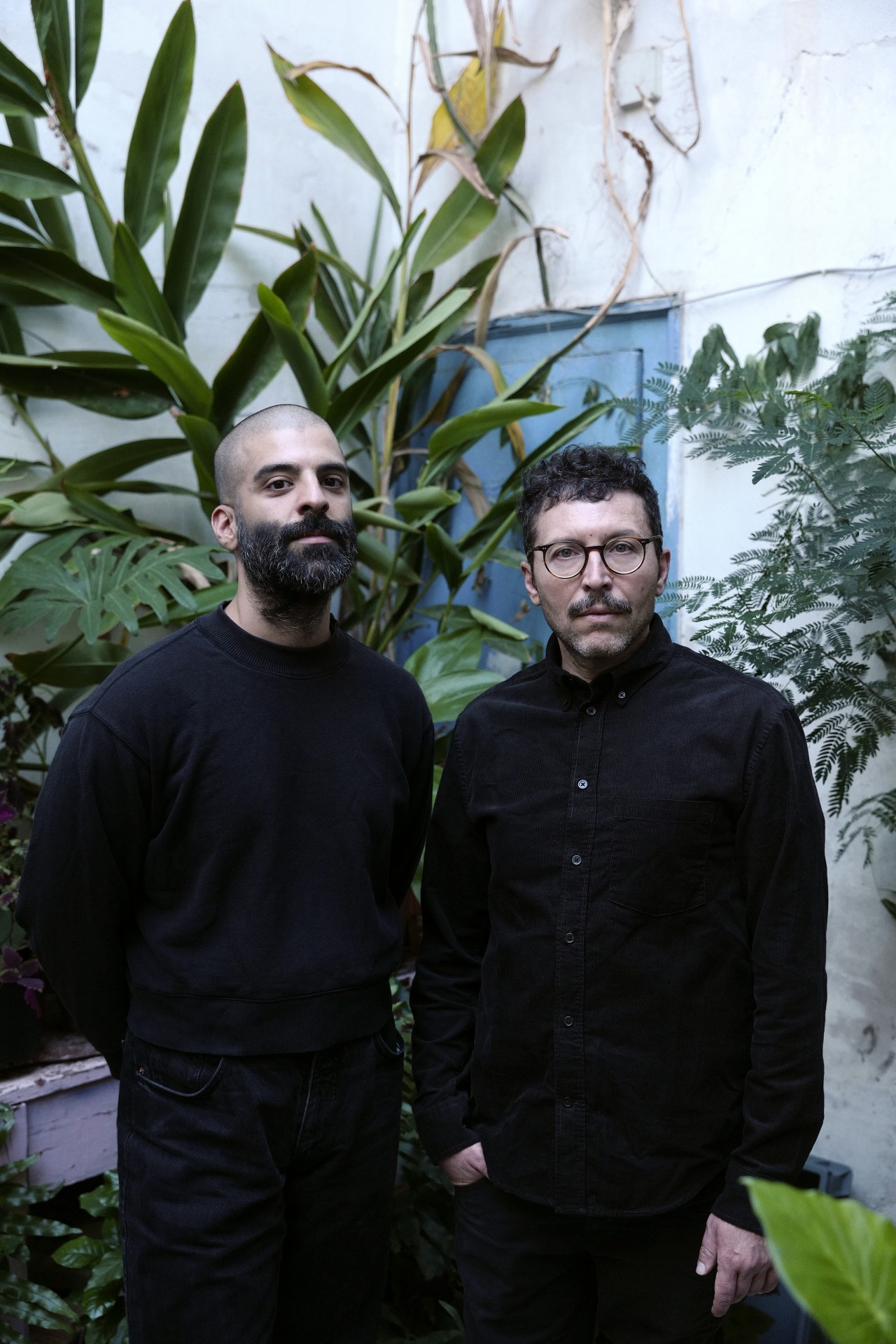
Ecologie post-agricole explores the concept of post-agriculture as a framework for radically rethinking the relationship between humans, cultivated plants and other living organisms. By involving growers, scientists, artists and researchers within urban gardens and art institutions, the project initiates collective processes to reflect on the forms of control and discipline established by humans and their role in shaping interspecies relationships, opening up the possibility of experimenting with new forms of awareness, cultivation and care.
It is a long-term project that begins with a residency by Aterraterra (Fabio Aranzulla and Luca Cinquemani) and unfolds through a phase of research and experimentation with the gardeners of Orti Generali and Agrobarriera. At the same time, a vegetable garden managed by Almanac will be designed as a means of re-imagining the relationship between cultural institution and cultivation – that is, symbolic production and material production – in relation to the social, cultural and more-than-human ecosystem in which it is embedded. Throughout the year, various activities and public programme days will be organised, conceived as open transdisciplinary research workshops in preparation for a final exhibition of Aterraterra by Almanac, scheduled for spring 2027.
The research will focus on an experiment involving tomato plants. Last year, the Aterraterra duo began with a genetic mix of 30 tomato varieties—both domesticated and wild—to establish an experimental community based on uncontrolled hybridisation, no longer guided by the principles of genetic purity and varietal stability, but by open, hybrid and unpredictable processes.
The first generation of seeds resulting from this initial experiment is the starting point for Post-Agricultural Ecologies. After a winter of germination at the Gramaglia nursery in Collegno, the seedlings will be distributed to the gardeners at Orti Generali and Agrobarriera. They will be planted so that they climb along a simple cane structure, ensuring that, once in bloom, they are close together, thereby encouraging cross-pollination between the different varieties.
The cultivation will thus become a means of analysing human behaviour in agricultural practice and demonstrating the constructed and cultural nature of cultivated plant forms. At the same time, these experimental crops, conceived as areas of shared management and care, will prompt reflection on the boundaries between private cultivation spaces and collective spaces within urban gardens. In this vein, collective systems for harvesting and processing the fruit and preserving the seeds will be put into practice.
Two main cultivation areas will be set up in the communal spaces of both urban gardens, which have different layouts and characteristics. Orti Generali, on the southern edge of Turin in the Mirafiori district, is located in a peri-urban setting, nestled within a natural environment featuring wild areas, close to the banks of the River Sangone. Agrobarriera, on the other hand, is situated in the heart of the Barriera di Milano district in Turin, and thus within an urban architectural setting; it uses agriculture and food self-production as a tool for creating social networks within the neighbourhood.
The cultivation at Agrobarriera will be managed by Almanac and, in addition to planting tomato plants, will also involve the seasonal cultivation of other plant species. This will allow the practice of cultivation, the care of agricultural land and food production to be integrated into the institution’s activities, to observe how this might redefine daily work and the relationship with the people living in the neighbourhood and with the non-human world.
Ph: Dominique Koch
Check out the project's progress and the public program!
Ecologie post-agricole esplora il concetto di post-agricoltura come cornice per ripensare radicalmente il rapporto tra umani, piante coltivate e altri organismi viventi. Coinvolgendo coltivatorə, scienziatə, artistə e ricercatorə all’interno di orti urbani e istituzioni artistiche, il progetto attiva processi collettivi per riflettere sulle forme di controllo e disciplina istituite dall’umano e sul loro ruolo nel modellare i rapporti interspecie, aprendo alla sperimentazione di nuove forme di consapevolezza, coltivazione e cura.
È un progetto a lungo termine che prende avvio da una residenza di Aterraterra (Fabio Aranzulla e Luca Cinquemani) e si sviluppa attraverso una fase di ricerca e sperimentazione con lə ortolanə di Orti Generali e di Agrobarriera. Contestualmente, verrà progettato un orto gestito da Almanac come dispositivo per re-immaginare il rapporto tra istituzione culturale e coltivazione – dunque produzione simbolica e produzione materiale – in relazione all'ecosistema sociale, culturale e più che umano nel quale è inserito. Durante l'anno verranno organizzate diverse attività e giornate di public program concepite come laboratori aperti di ricerca transdisciplinare in preparazione di una mostra finale di Aterraterra da Almanac, prevista nella primavera 2027.
La ricerca si concentrerà su una sperimentazione con le piante di pomodoro. L'anno scorso il duo Aterraterra è partito da un miscuglio genetico di 30 varietà di pomodoro tra addomesticate e selvatiche, per attivare una comunità sperimentale a ibridazione non controllata, non più guidata dal principio di purezza genetica e staticità varietale, ma da processi aperti, ibridi e imprevedibili.
La prima generazione di semi frutto di questa prima sperimentazione è il punto di partenza di Ecologie post-agricole. Dopo un inverno di germinazione presso il vivaio Gramaglia di Collegno, le piantine verranno distribuite allə ortolanə di Orti Generali e Agrobarriera. Verranno messe a dimora facendole arrampicare lungo una semplice struttura di canne in modo tale che, una volta fiorite, si troveranno vicine favorendo l’incrocio tra le diverse varietà.
La coltivazione diventerà dunque un dispositivo per analizzare il comportamento umano nella pratica agricola e mostrare il carattere costruito e culturale delle forme vegetali coltivate. Allo stesso tempo, queste coltivazioni sperimentali, concepite come aree a gestione e cura comune, attiveranno riflessioni sui confini tra spazio privato di coltivazione e spazio collettivo all’interno degli orti urbani. In questa direzione verranno messi in pratica sistemi collettivi di raccolta e trasformazione dei frutti e conservazione dei semi.
Due coltivazioni maggiori saranno allestite negli spazi comuni di entrambi gli orti urbani, che presentano conformazioni e caratteristiche diverse. Orti Generali, al confine sud della città di Torino, nel quartiere Mirafiori, è in un contesto periurbano, immerso in un ambiente naturale con aree selvatiche, vicino alle rive del fiume Sangone. Agrobarriera, invece, nel bel mezzo del quartiere Barriera di Milano a Torino, e dunque in un contesto architettonico urbano, utilizza l’agricoltura e l’autoproduzione alimentare come strumento per la creazione di reti sociali nel quartiere.
La coltivazione da Agrobarriera sarà gestita da Almanac e prevede, oltre alla messa a dimora delle piante di pomodoro, anche una coltivazione stagionale di altre specie vegetali. Ciò permetterà di integrare la pratica della coltivazione, la cura del suolo agricolo e la produzione di cibo nella sfera dell’attività dell’istituzione, per osservare come ciò possa ridefinire il lavoro quotidiano, il rapporto con le persone che abitano il quartiere e con il non umano.
Ph: Dominique Koch
Scopri gli avanzamenti del progetto e il public program!